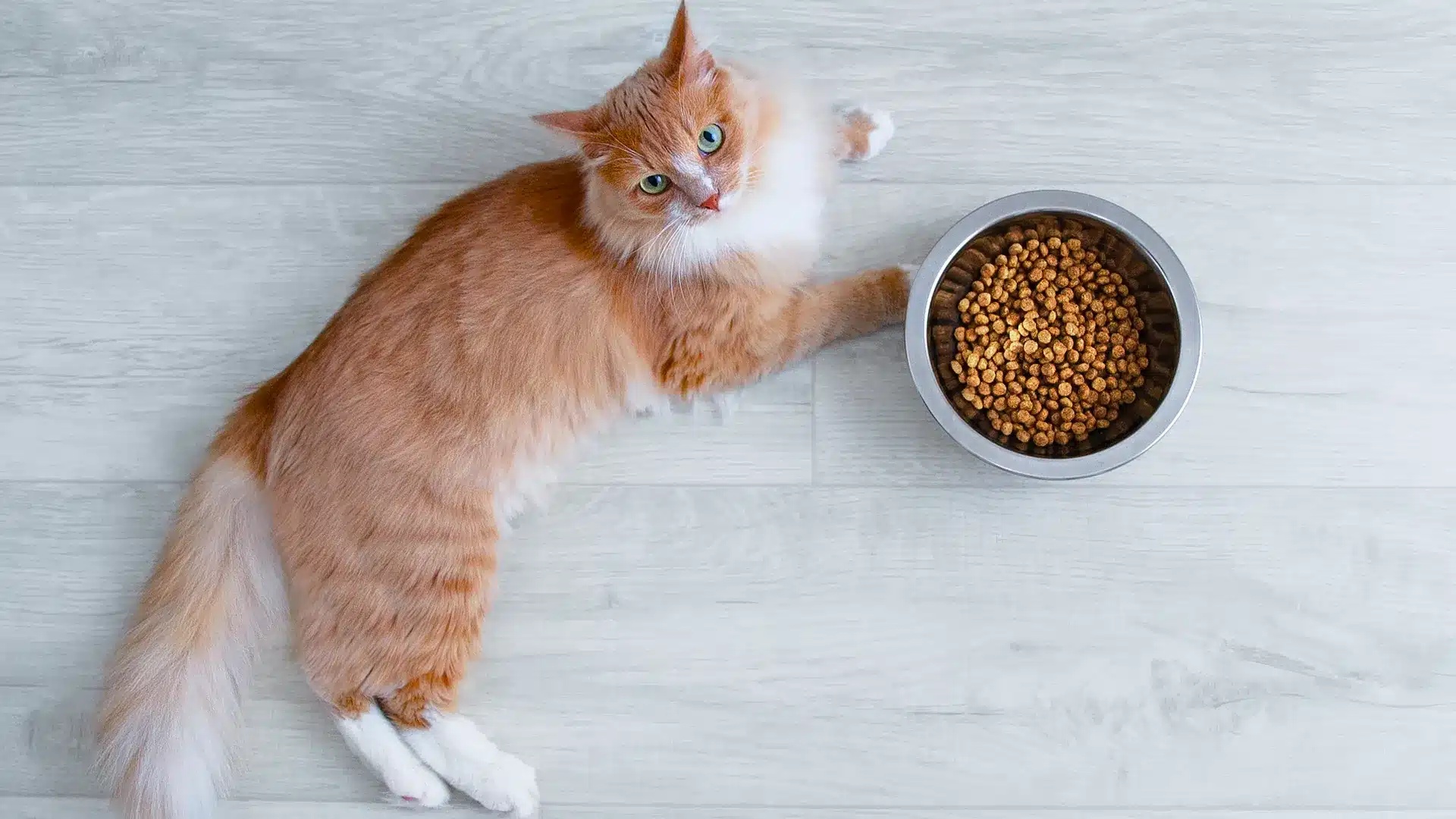

They never finish the food in their bowl, walking away with a picky attitude. In fact, some cats stop eating not so much because they feel full, but for a very different reason that lies in their sense of smell. This is according to a recent study by researchers at Iwate University in Japan, which suggests that this widespread eating habit among domestic cats is largely regulated by habituation to smells. In other words, they get used to the same smell and no longer find any reason to keep eating. The details were published in the journal Physiology & Behavior.
Cats That Stop Eating
To understand why some cats stop eating, researchers conducted a series of experiments in which the cats were offered food in six consecutive meals over a two-hour period. Through subsequent observations, the team discovered that when the same food was repeatedly presented, the cats gradually reduced the amount of food they ate in subsequent cycles. Conversely, when different foods were presented, the cats’ appetites increased again. In another experiment, in which cats were fed the same food for five consecutive cycles and a new food in the sixth and final cycle, intake decreased through the fifth trial, increasing again in the sixth meal, regardless of whether the new food was more or less palatable than the initial one.
It’s All About Smells
The most surprising finding, however, emerged when the researchers observed that even without changing the food, simply introducing the scent of a different food restored the cats’ desire to continue eating. “These results suggest that cats do not stop eating simply because they are full,” commented study author Miyazaki. “Rather, their motivation to eat decreases as they become accustomed to the smell of the food, and can be restored by introducing a new smell. Sensory novelty, particularly olfactory novelty, can reactivate the motivation to eat in cats.”
Practical Applications
The results of this new study provide the first experimental evidence that odor-dependent habituation may help explain the characteristic feeding behavior of felines, characterized by small, frequent meals throughout the day. In addition to improving our understanding of the feline world, as the authors conclude, this new information could also have practical implications for cats and their owners, helping to develop new feeding strategies for animals with reduced appetite, improve the nutritional management of elderly or sick cats, and support the development of pet foods formulated with olfactory variations to help maintain motivation to eat.
